
Earlier this month, we interviewed Professor Cothran Ceen and followed one of her Cartographic Walks through the city, learning how the history the Eternal City reveals itself through the many iterations of Rome’s urban fabric. Over the course of 2,000 years, the built environment transforms again and again, demonstrating how the past informs not only our understanding of the present but also our future contributions to the urban landscape.
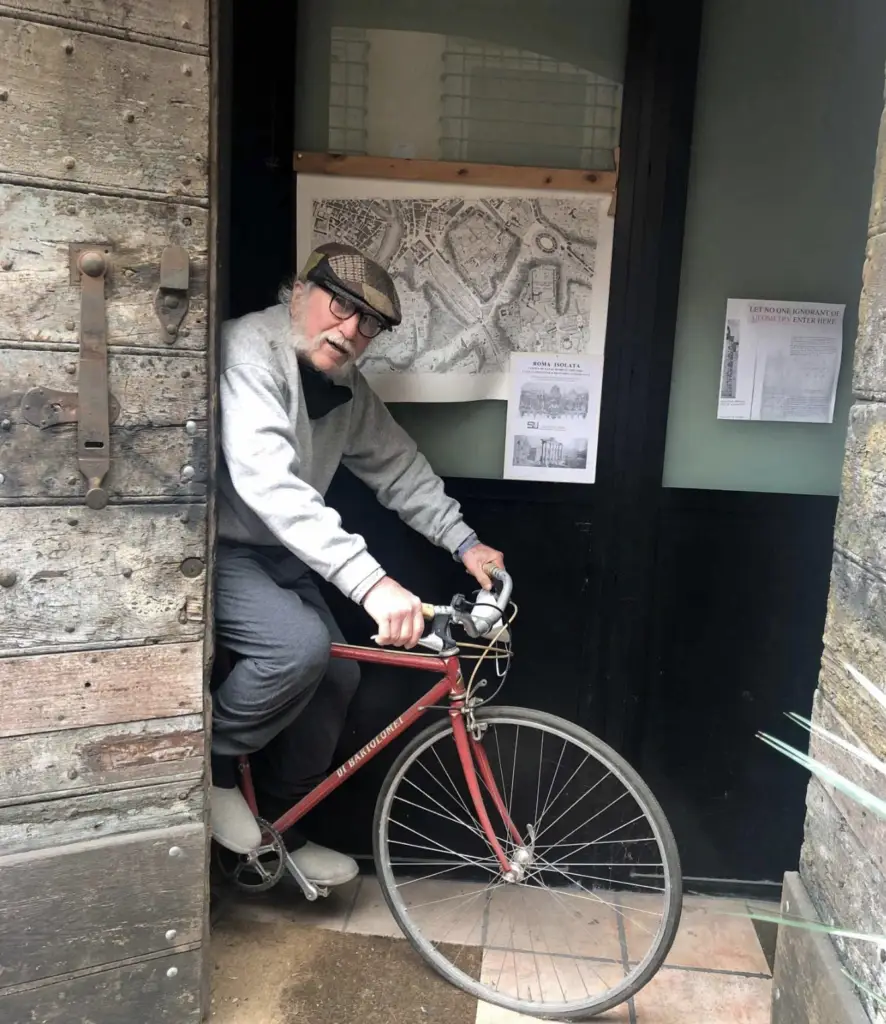
Allan on his infamous bicycle leaving his studio in the Borgo neighborhood.
The Cartography course originated with former Pantheon Institute Professor Allen Ceen (1934-2025). Allen was passionate to the exploration and examination of Rome through the centuries of maps iterated by some of the world’s best cartographers, architects, and urban planners. From Bufalini to Nolli, Allen believed that the history of Rome reveals itself through its cartographic transformation, leaving a pathway through history that anyone can follow if they dedicate the time and patience to examine the maps. And thus, Pantheon Institute’s once monuments-focused urban design course shifted to a routes-focused course, bringing students out into the city to retrace thousands of years of history on foot.
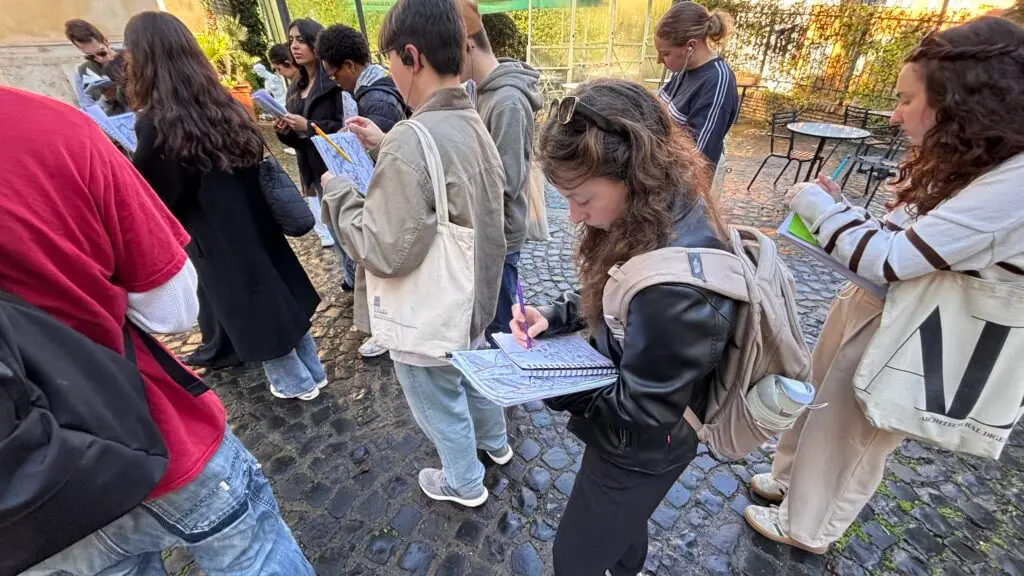
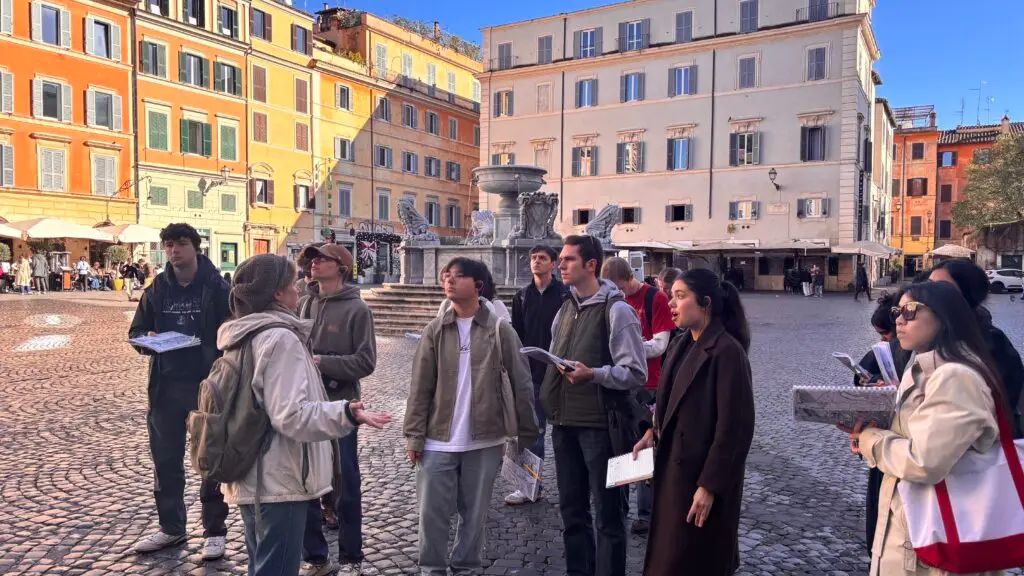
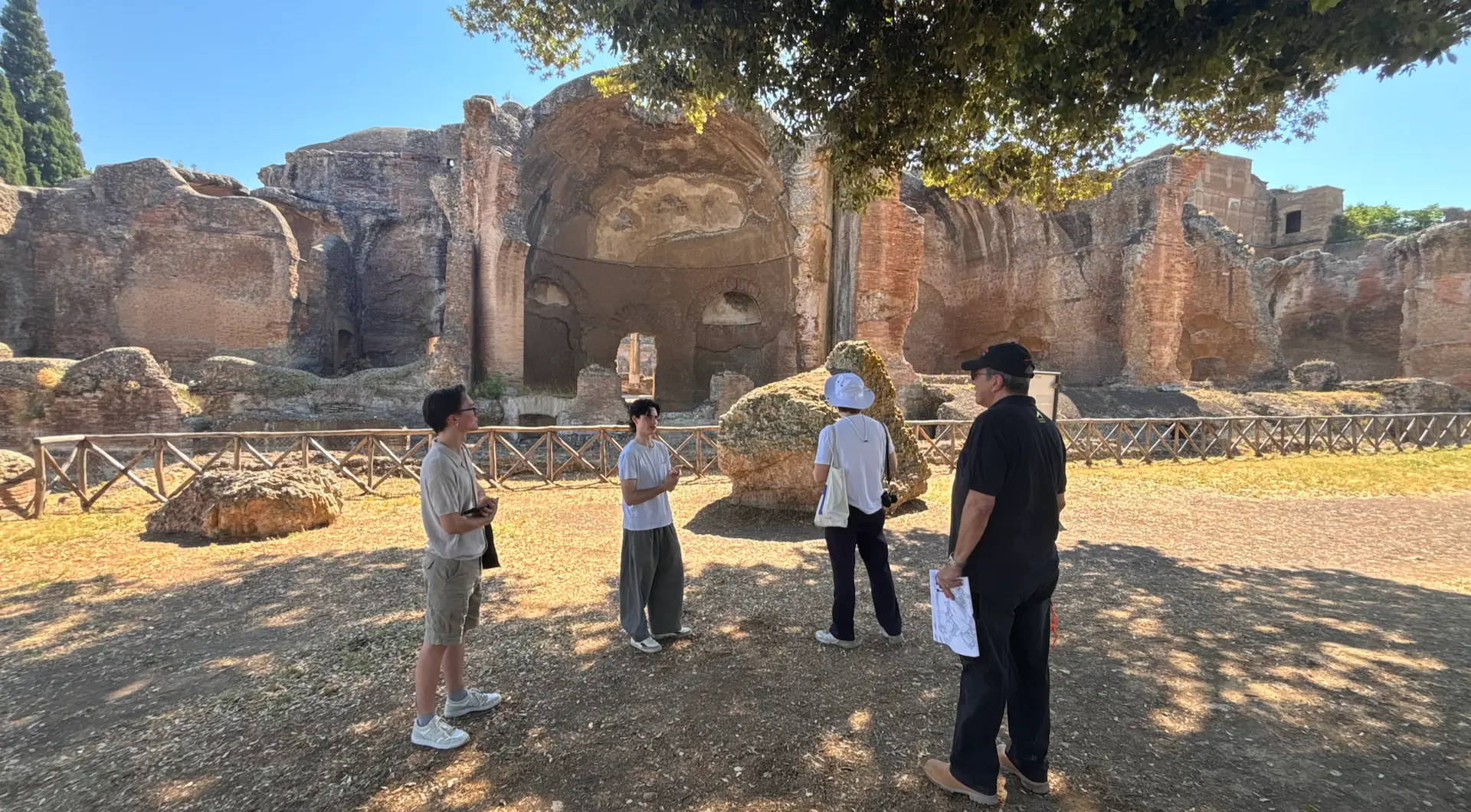
Today, Professor Cothran Ceen (Allen’s widow and former colleague) continues Allan’s legacy and leads the cartographic walks through Rome. During the semester, students participate in 12 different neighborhood walks, referencing dozens of maps and learning how to chart a course through history. Students will compare maps to see what remains today and what has been modified overtime to accomodate the political, religious, architectural, and technological evolution of the city.
PSU student Madison Smith takes notes on a walk.
“Prehistoric pathways, like the old Salt Route, the Via Salaria Vetus, which predates the city itself, is a route that was used by the Sabines to come down the hills to approach the ford in the river, right before the Tiber Island, and then continue on their way to the coast, but a good section of it can be reconstructed.” (Cothran Ceen)
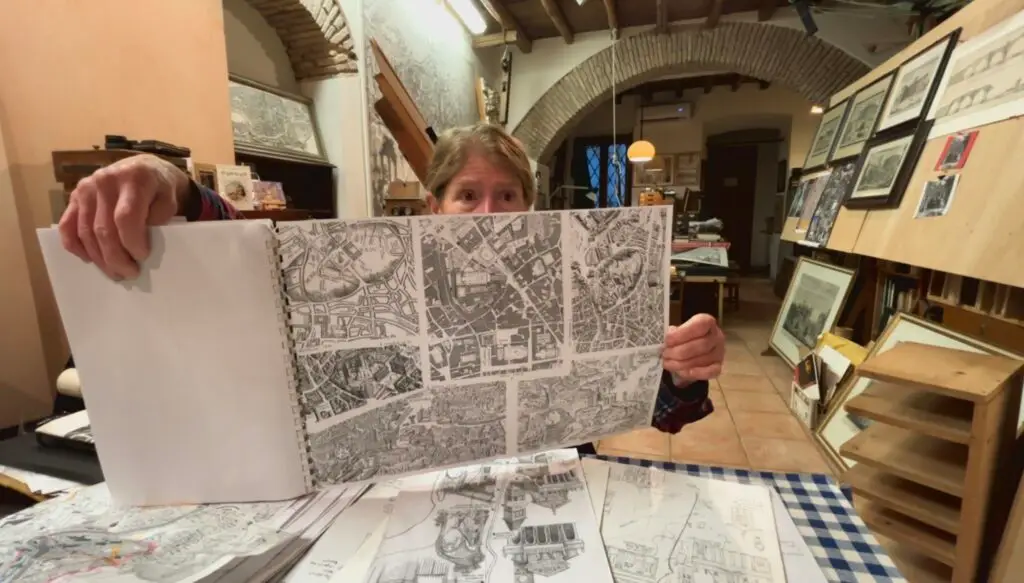
Cothran holding up a page in the Cartography Course Manuel that compares six different maps of the Capitoline Hill and the Campidoglio.
The Cartography Course Manual features a comparison of maps through the centuries, allowing for side-by-side comparison of various periods of a particular location in the city over various points in time. “Going around the page, you can see the chronological sequence and you can just sit with the students and we can look at this for, like, an hour, analyzing and looking very closely. It takes patience, and you have to be looking at the details… but you can piece it together and see how this major site in the city evolved over time.”
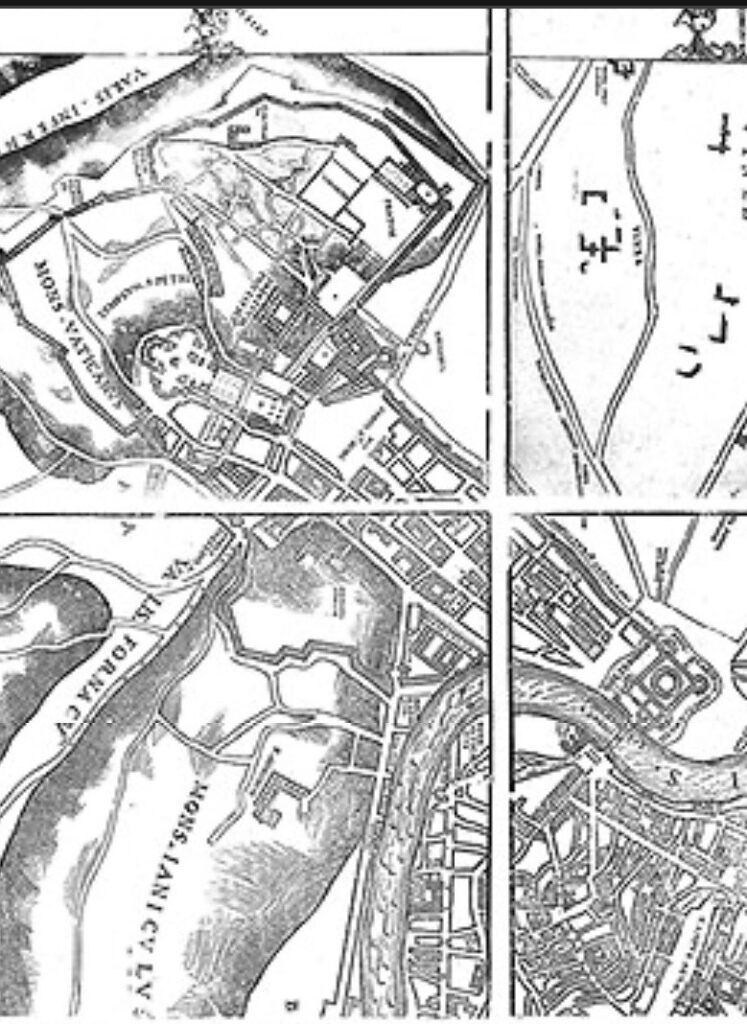
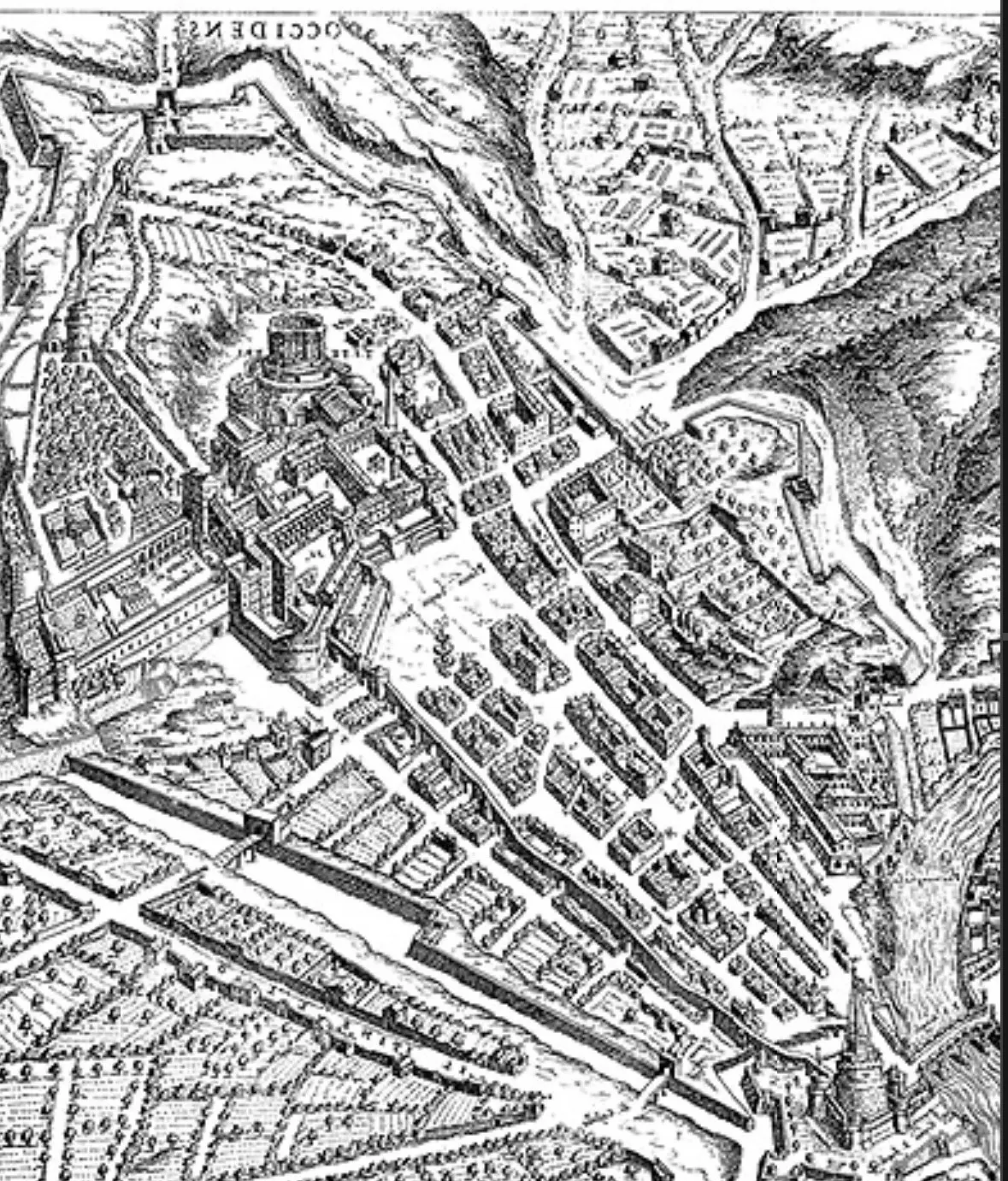
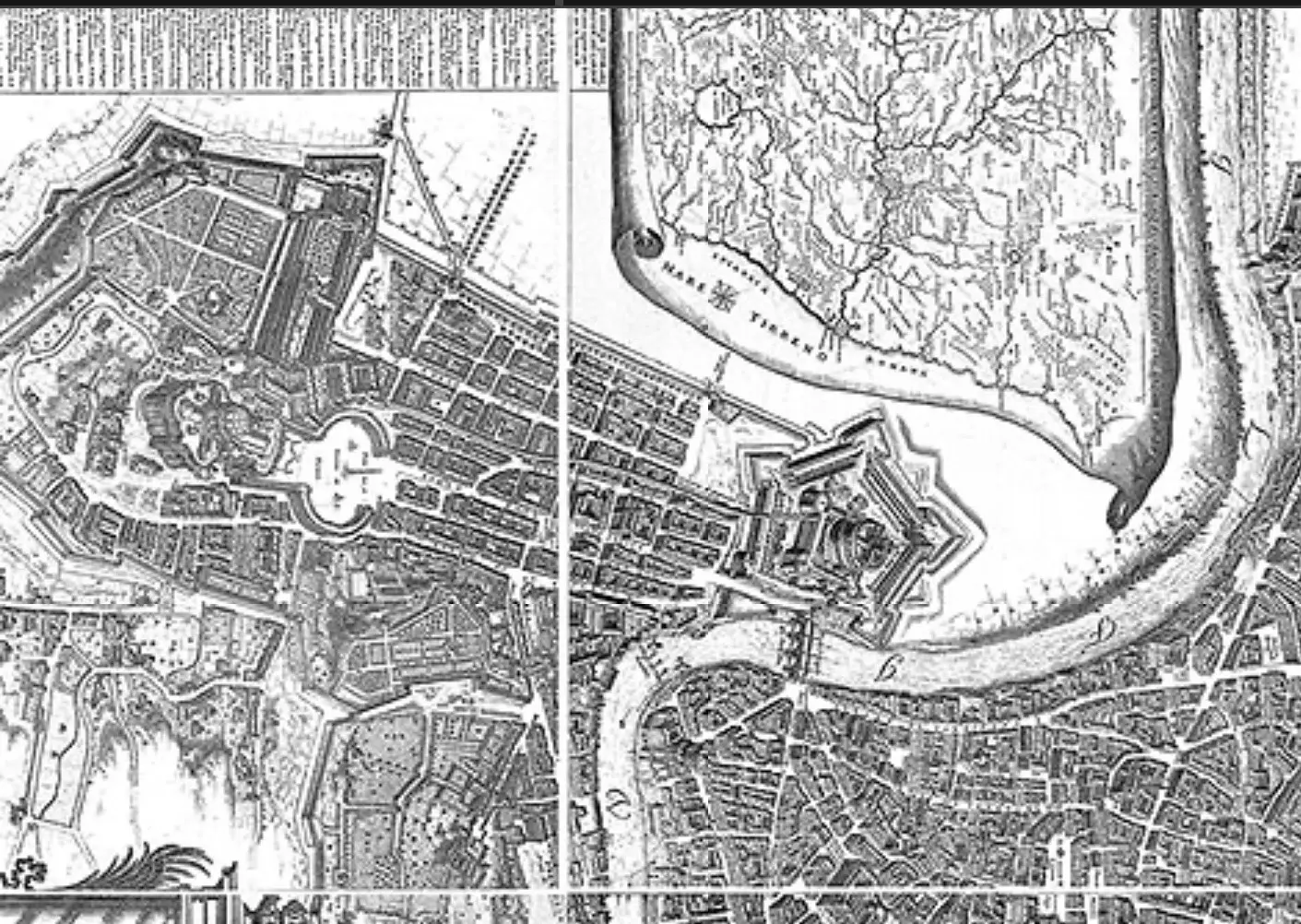
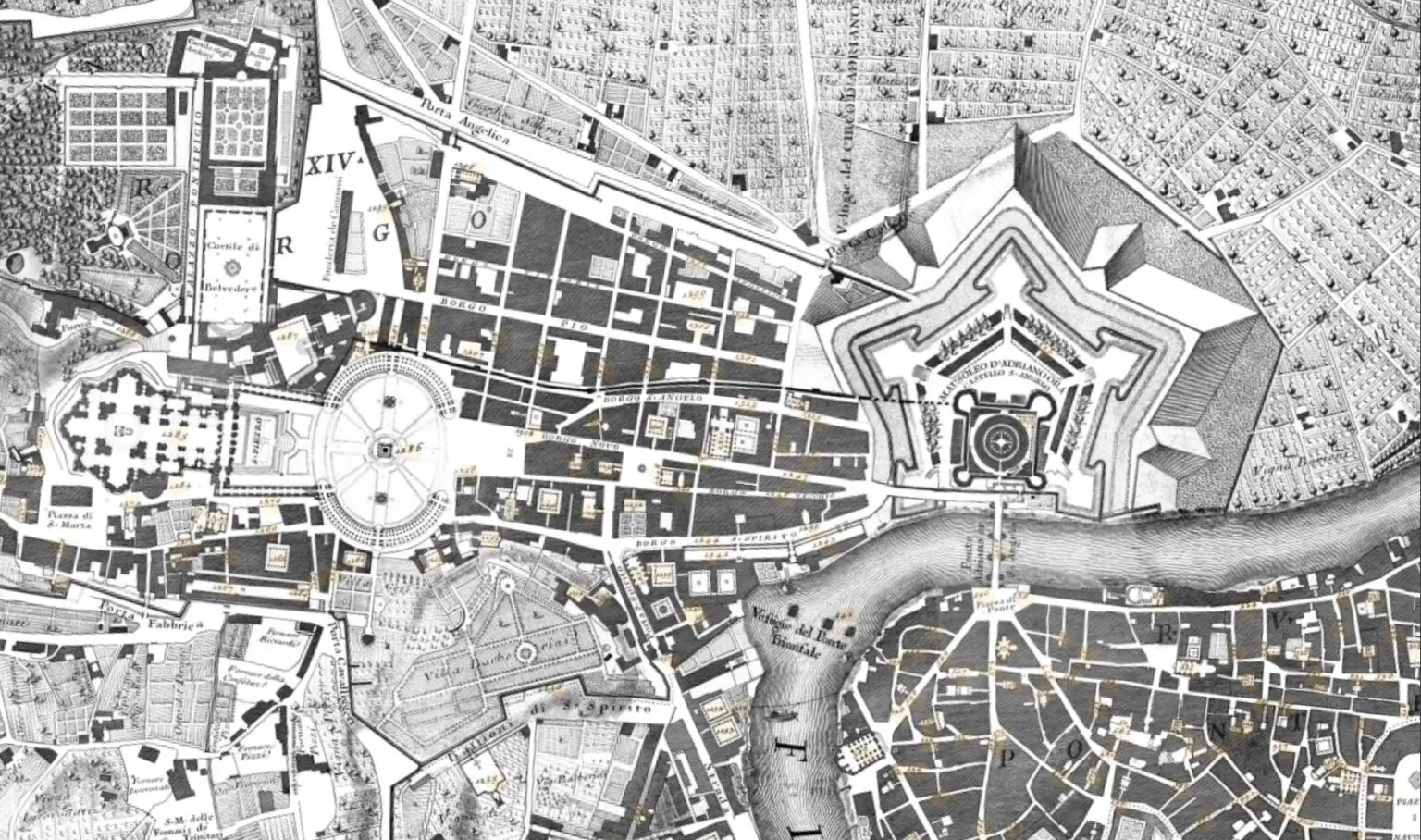
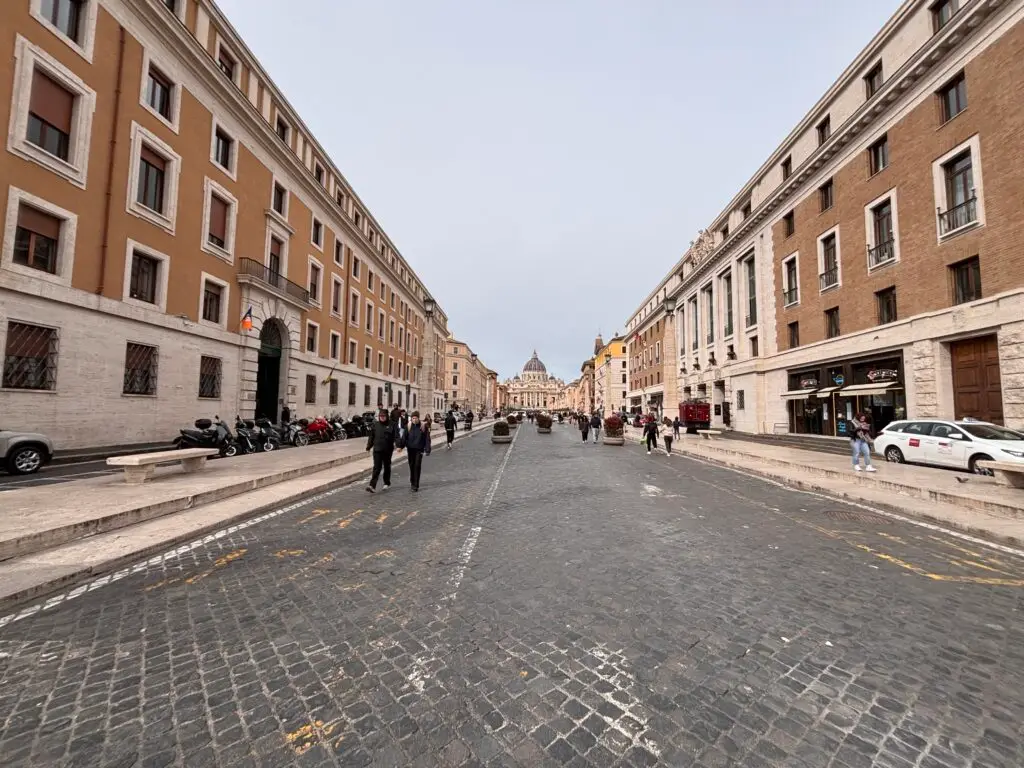
Cothran gives the example of how you can see, through an examination of maps from the 16th, 17th, and 18th centuries, that the Renaissance street, the Borgo Nuovo, influenced Bernini’s design of the Piazza San Pietro in front of St. Peter’s Basilica in Vatican City. Even though the majority of the Borgo Nuovo was eliminated in 1936 to make way for the Via Conciliazione (extending from Piazza San Pietro to the Castel Sant’Angelo), the maps show how Bernini based his design on what was there, evolving the piazza to align with the existing roadway.
Above Maps of Piazza San Pietro to the Castel Sant’Angelo – Top Left: Leonardo Bufalini, 1551; Top Right: Etienne Duprac, 1577; Bottom Left: Giovan Battista Falda, 1676; Bottom Right: Giovan Battista Nolli: 1748. Below: Via Conciliazione.
Pursuing a design ideology that honors the intentions of the past is a way to ensure the cultural heritage and physical memory of the spaces we in habit, both individually and collectively. To that end, Cothran hopes that students will learn how to adapt their designs to the existing landscape and, “evolve their contributions” to the built environment.
Thank you to Cothran Ceen for sharing her insights and her incredible studio with us. We can’t wait to see where you take the students next!