
Architecture Is Power

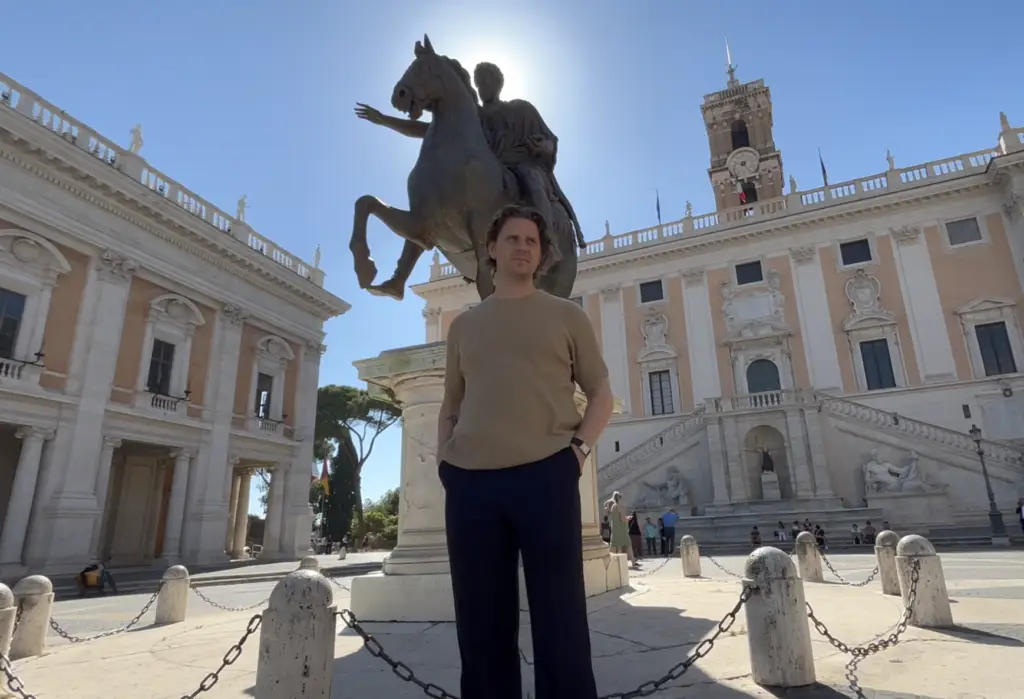
This May and June, we welcomed students David Decker (Carnegie Mellon University), Kelly Vigil (The School of Architecture) and Santiago Sanchez (The Southern California Institute of Architecture) to our Summer 2026 architecture program. During a visit to the Capitoline Museum, we talked about all about experiential learning in the Eternal City and what studying in Rome has meant to them as young architects.

Watch the full video interview on our YouTube channel.

First up is Kelly Vigil. Originally coming to the field of architecture from the world of journalism, advertising, and media production, Kelly is now pursuing a Masters of Architecture at TSOA in Scottsdale, Arizona. While at Pantheon Institute, he studied Vertical Design Studio, Cartography, and Watercolor Painting. His decision to come to Rome was motivated by a desire to discover how the historical layers of the built environment influence each other over time. 

Much like the interwoven styles, textures, innovation, and materials throughout Rome’s multifaceted 2000 year-old urban landscape, Kelly says that his course load at Pantheon Institute is intrinsically connected with the shared goal of “peeling back the layers,” and learning how each creative discipline can shift his perspective on understanding the built environment around him.  Kelly explains, “the cartography class gives me a very unique perspective on the pathways through Rome, rather than through the monuments“. Being able to evaluate a city according to the transformation of it’s streets and shared public spaces further informs how, why, where, and when a particular building or structure is conceived and placed or even how facets of the city evolve over time due to shifting political, religious, and cultural narratives. 

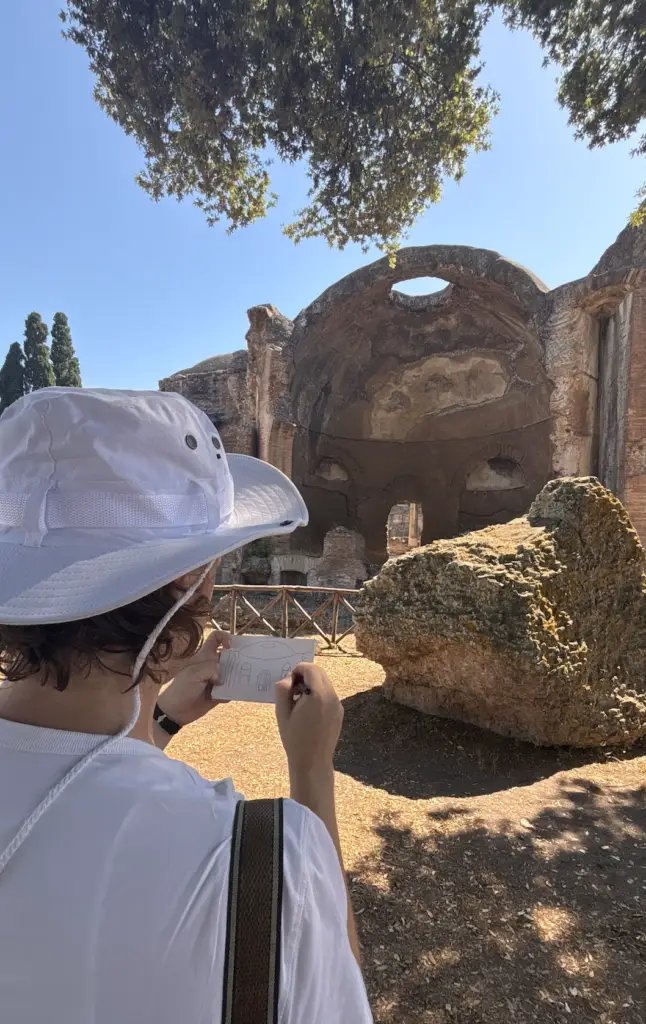
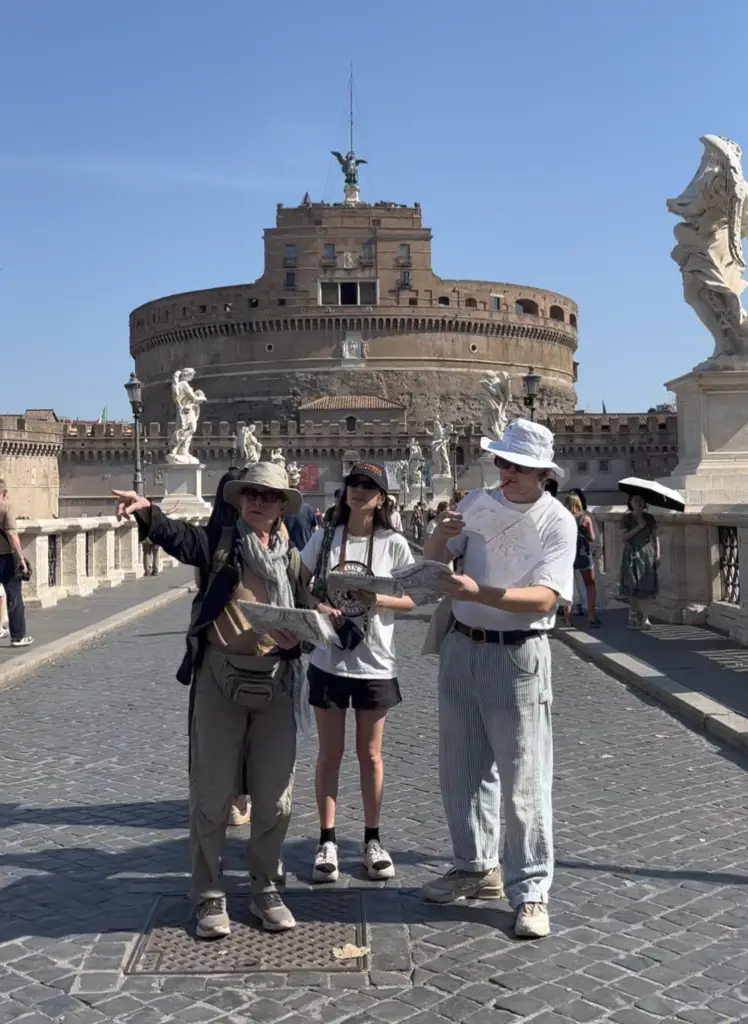
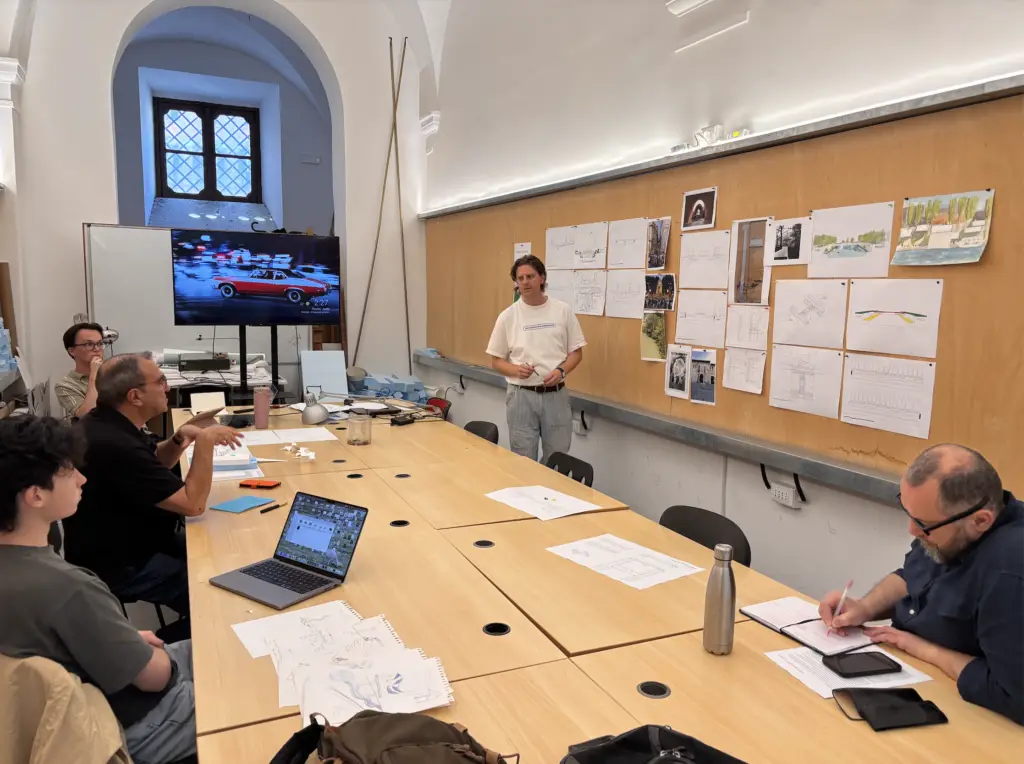
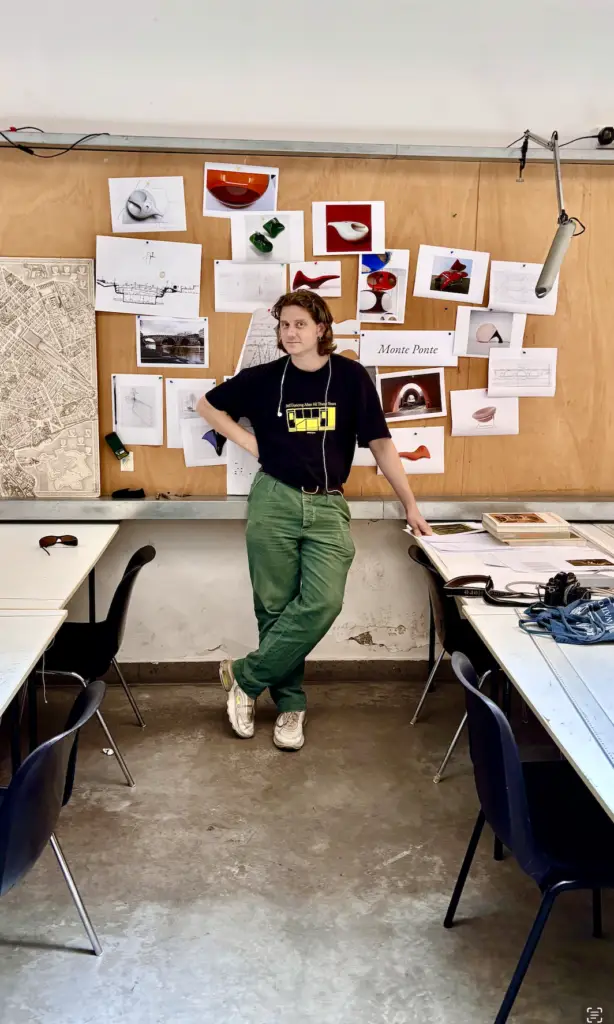
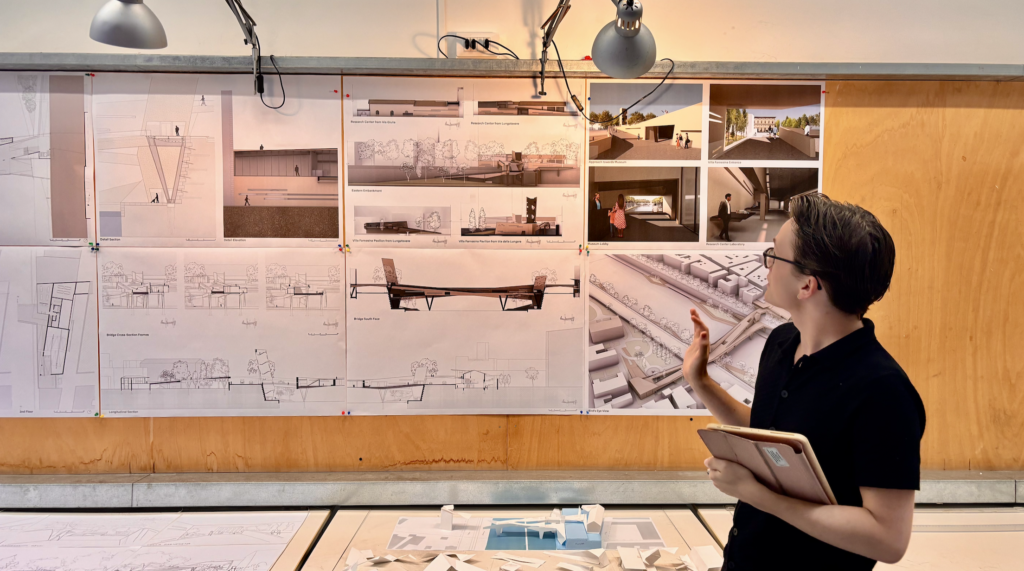
Photos clockwise from top left: Kelly sketching in Villa Adriana on a guided site visit; Kelly on a cartographic walk with professor Cothran Ceen (left) and visiting TSOA Dean Stephanie Lin (middle); Kelly presenting his project during mid-term reviews to Professor Romolo Martemucci (middle left) and professor Alessio Rosati (bottom right); Kelly in the Gatta Studio.

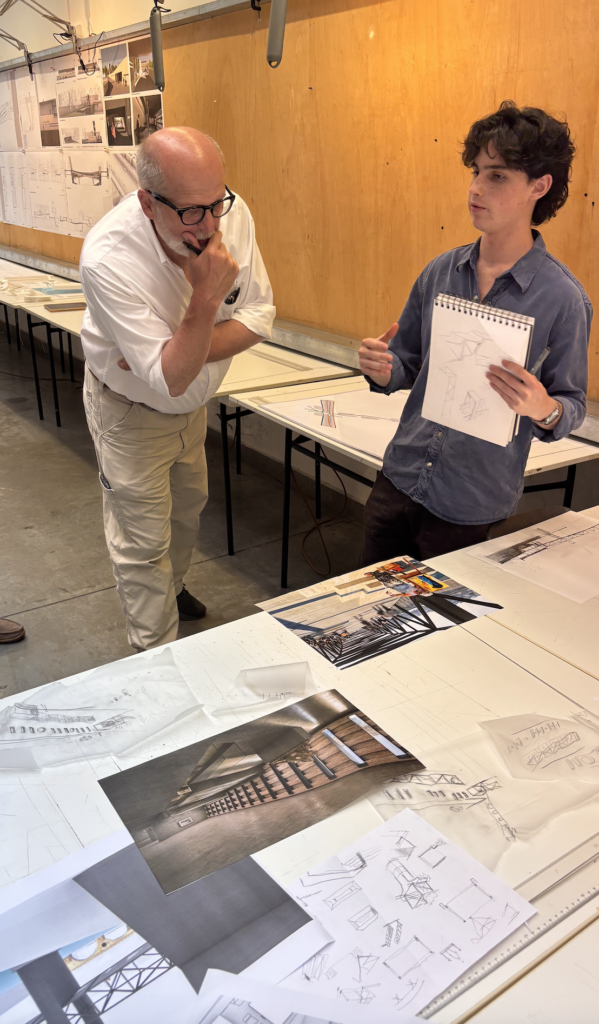
Up next is David Decker. David is a 4th year CMU B.Arch student who took our Vertical Design Studio. The project focused on designing a repurposed section of along the Tiber River between the Villa Farnesina and the Palazzo Farnese. David explains that, at Pantheon Institute, he has, “a lot more freedom to explore the different kind of forms and architectural ideas that I want, and really develop a sense of my own instincts as a designer“.

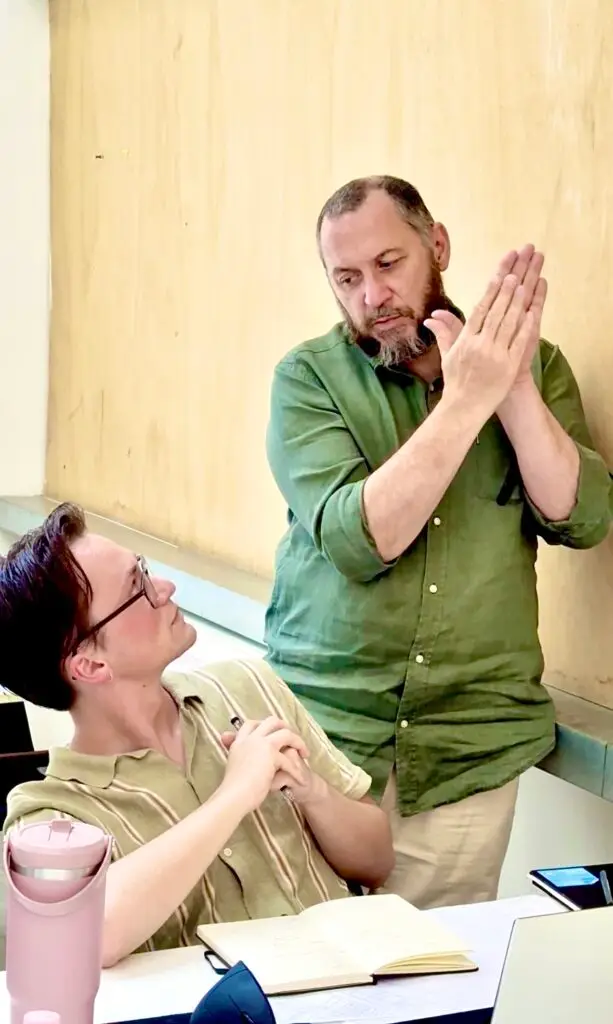
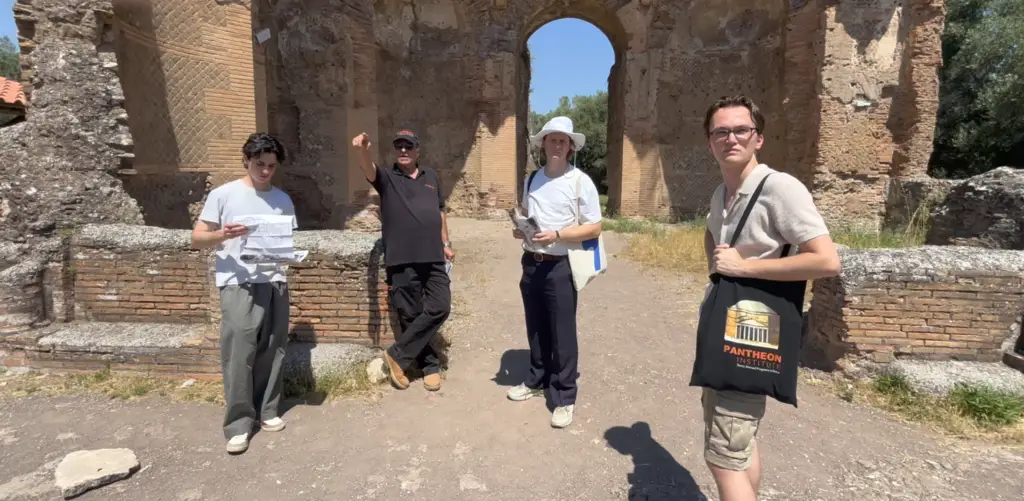
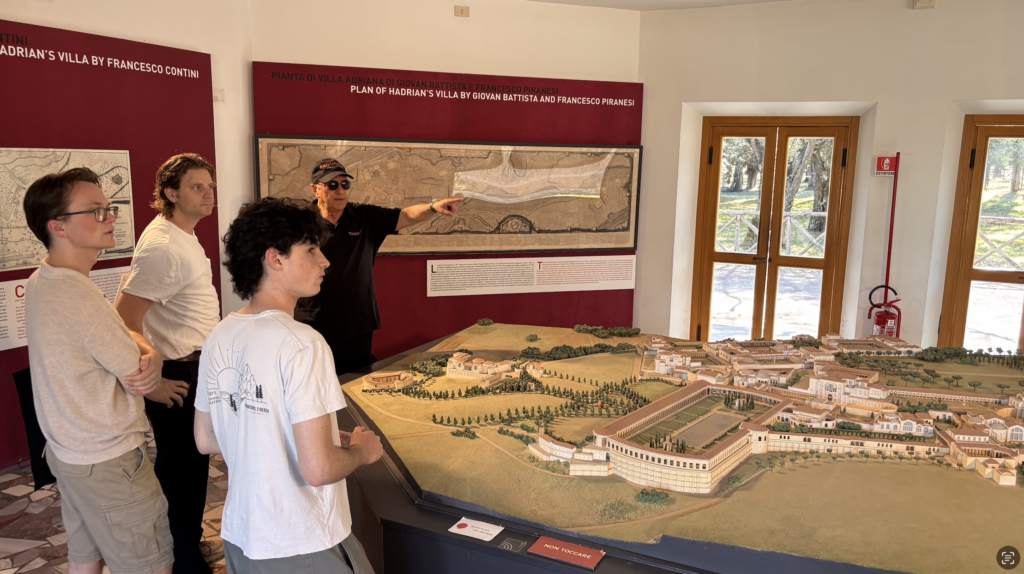
Photos – Left: David with Professor Alessio Rosati during Vertical Design Studio; Top Right: David presenting his final project; Bottom Right: (from left to right) Santiago, Pantheon Institute President Romolo Martemucci, Kelly, and David on a guided tour of Villa Adriana. 

David’s decision to come to Rome allowed him to study architectural sustainability and enduring legacy of design first-hand. Being able to evaluate how previous architectural interventions and building products have shaped a space over thousands of years imbues him with a sense of not only the historical narrative of the built environment but also the multiplicity of contextual design approaches. David explains, “It’s been very interesting for me to study because it really reflects how today we as architects can really engage with the context around our projects and our site and not just make an intervention for the sake of popping it down, but really derive our intervention from the people around it and then also the existing physical infrastructure that has existed beforehand“.

Finally, we meet Santiago Sanchez, a SCI-Arc 2nd year B.Arch student. Santiago took both studio and watercolor this summer. As part of Pantheon Institute’s commitment to experiential learning, our professors focus on leading classes onsite, out in the city, for an immersive experience that brings you face-to-face with history. Santiago explains, “It’s just it’s a very beautiful experience, if you’re an architect, to see the evolution of a city layer by layer and then get to have a design approach within the studio that forces you to confront the context of a of a place in general“.

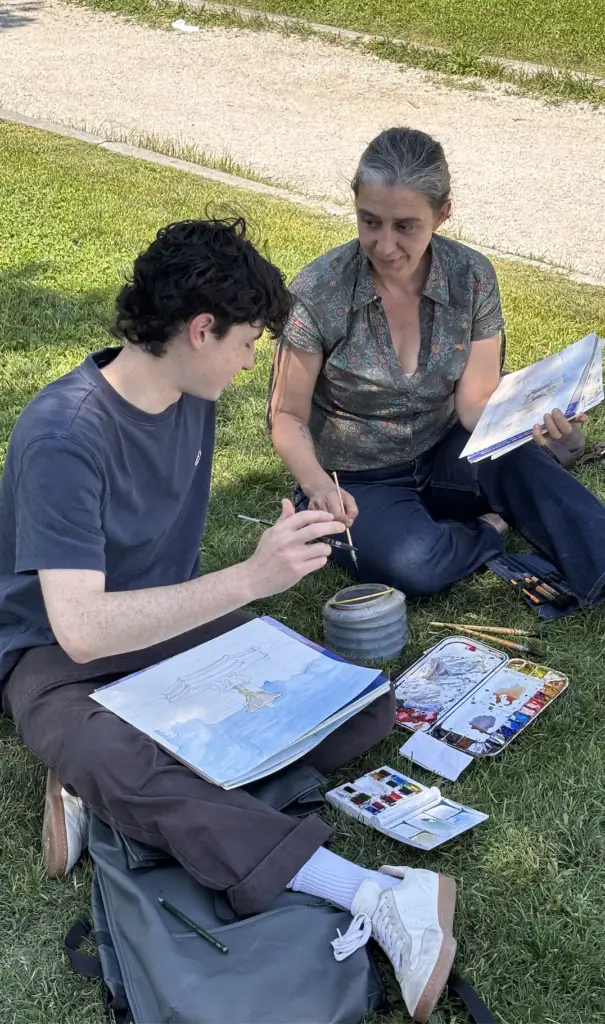
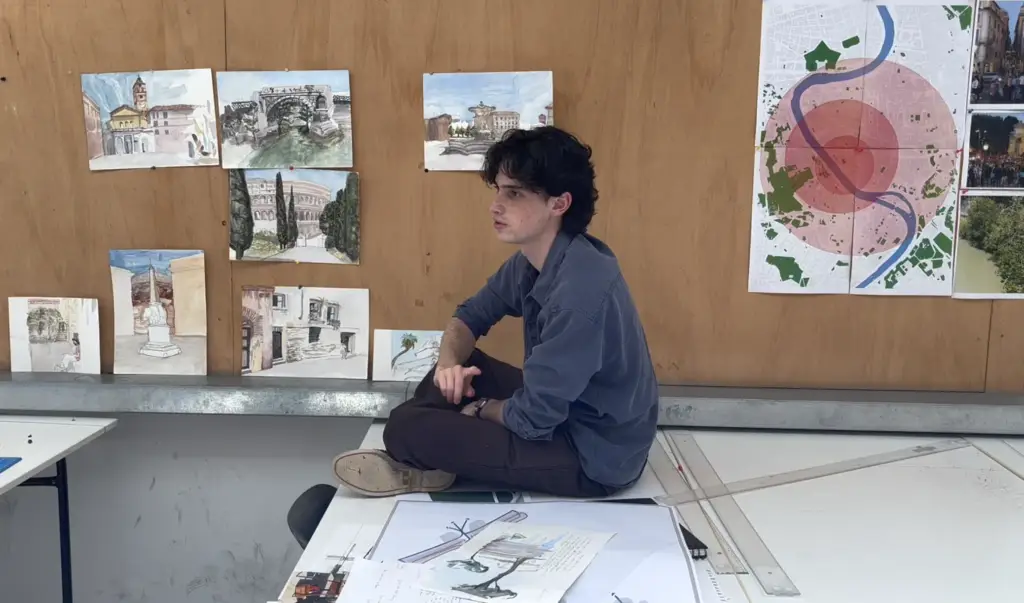
Photos clockwise from top left: Santiago painting out in the city with Watercolors professor Kelly Melford; Santiago presenting his final project to Penn Sate University architecture professor James Kalsbeek; Santiago sitting in front of his watercolors during the final exhibition; Santiago with David, Kelly, and Professor Romolo Martemucci on their visit to Villa Adriana.

Santiago’s focus and motivation in pursuing architecture is to create collective and communal spaces. “I want to create spaces where people can be social and create memories. … Rome has pushed me even more to create spaces where people can gather”. This summer’s studio project compels students to design a structure that acknowledges the diversity of the population and create an opportunity for shared engagement. Santiago explains, “We’re designing an urban intervention to bring people back to the river. We analyze the social spaces that Rome has, nowadays, and it’s tourists coming together with the locals. …. If you are open to receive space and the people within it, you’re going to have a great time, and Rome is a great time“. 

Rome feels like it’s own entity, a living and ever-evolving creature that continues to expand and transform, adapting to the people the wind through it’s many cobblestone roads, ancient monuments, and expansive parks. But, the Eternal City’s built environment sends another message beyond collective engagement, one of strength and power. Kelly explains, “Studying in Rome is transformative for understanding how architecture is power.  And whether or not I’m interested in displaying power in my own design, it’s inevitable that some sort of communication of culture of hierarchy and power is inevitable in any sort of design“.

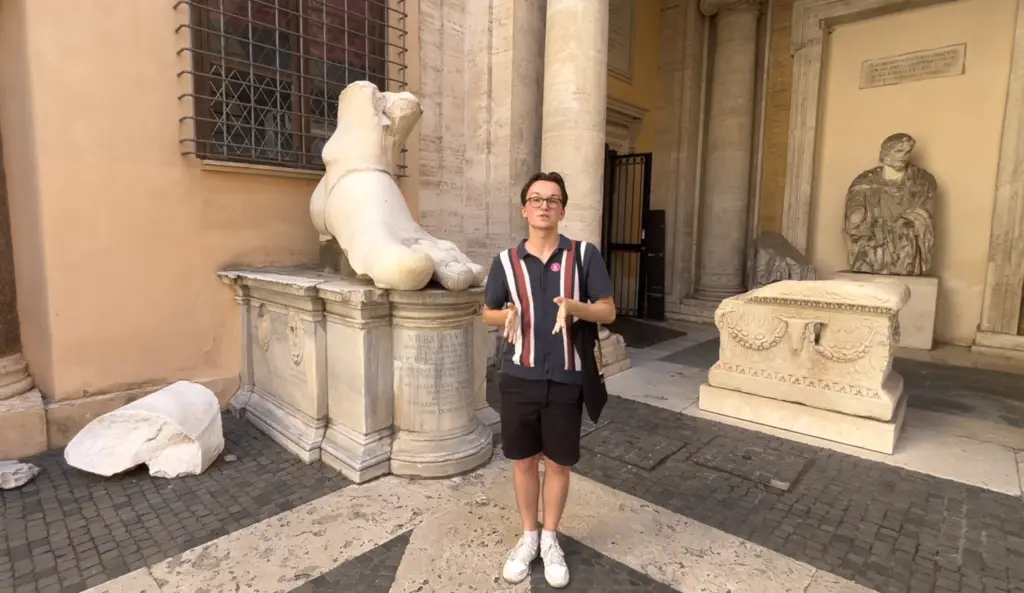
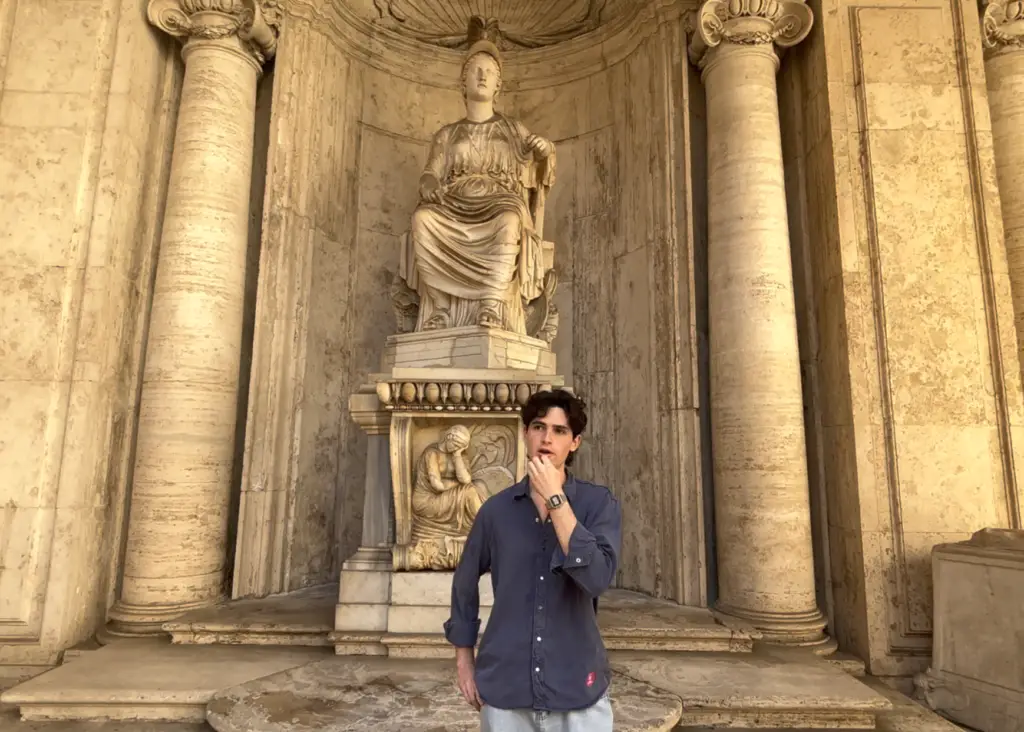
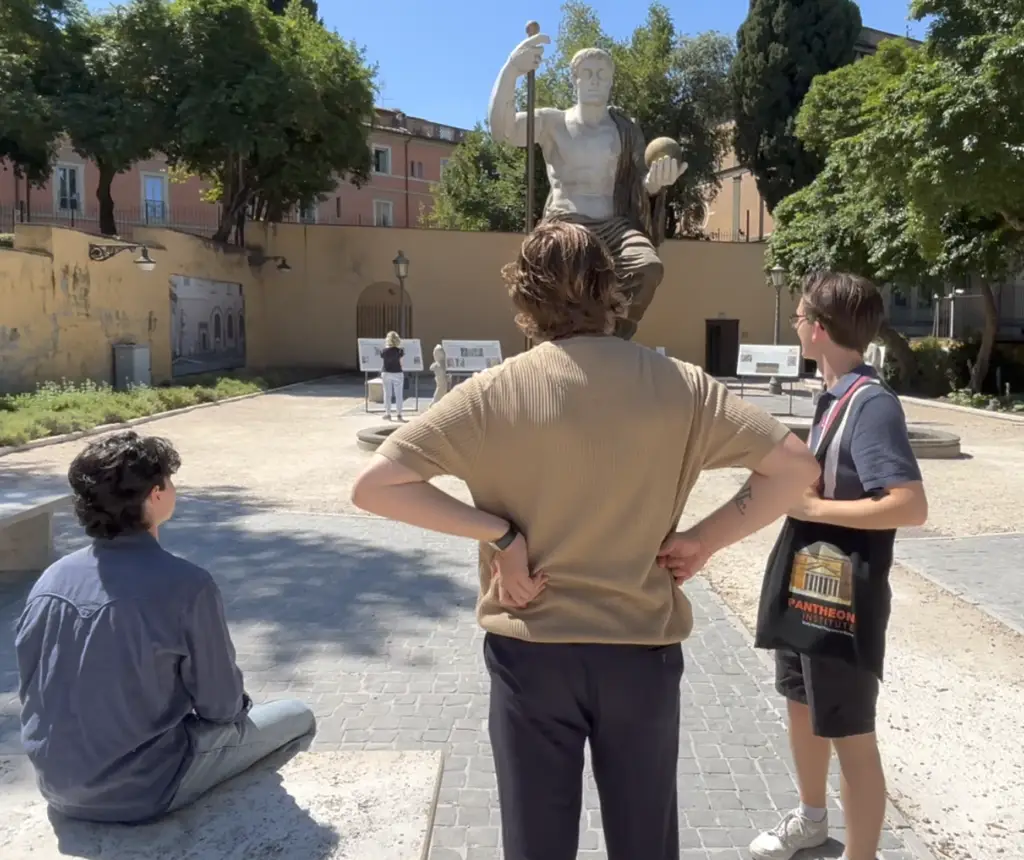
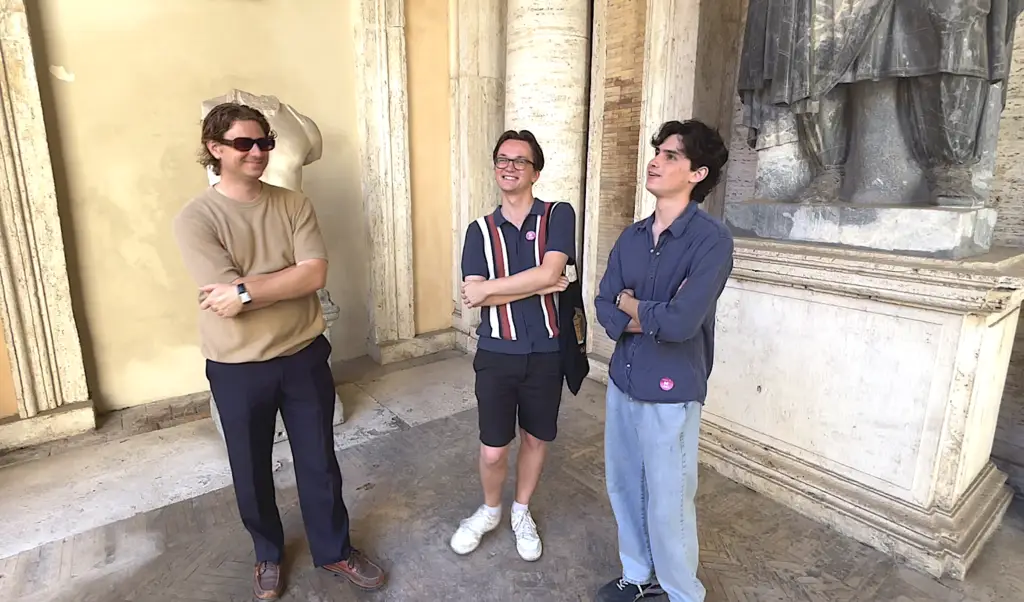
Right to left: Santiago, Kelly, and David in front of the Colossal Statue of Constantine I inside the Capitoline Museum garden.

Thank you, Kelly, David, and Santiago, for sharing your thoughts on Rome, architecture, and the impact of thoughtful design. We have loved having you all here this summer and we look forward to see what is next for you!

Leave a Reply

Your email address will not be published. Required fields are marked *

Get Out of Your Comfort Zone

This Spring, we talked to University of Massachusetts student in the Torre di Largo Argentina archeological park and learned how study abroad in Rome, at the Pantheon Institute, helped them get out of their comfort zone.
Academic Field Trip Series Spring 2026: Discovering Italy

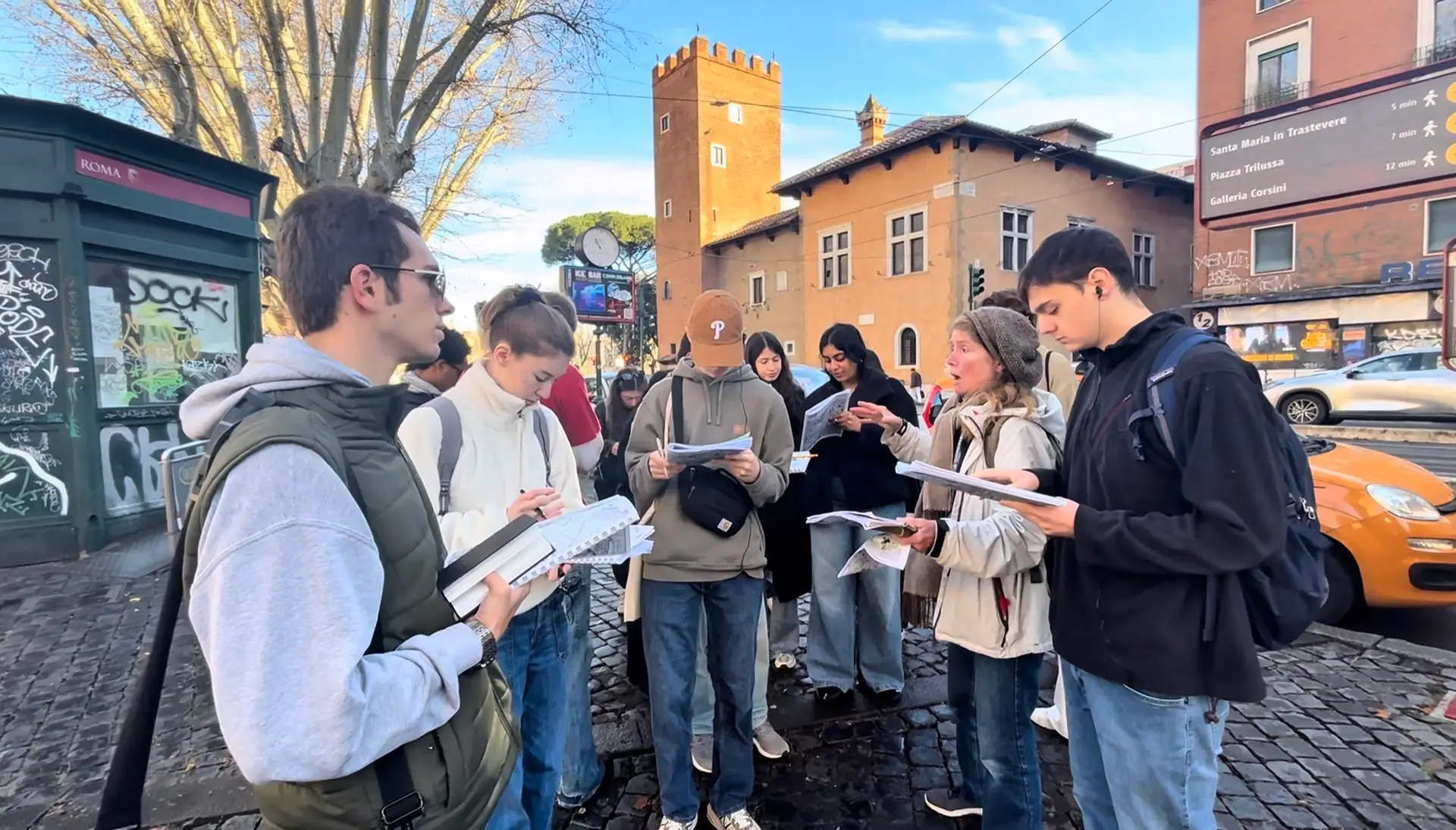
This Spring, our students toured the Italian Peninsula as part of our Academic Field Trip programming. From the ruins of Pompeii to Venice’s Ex Saffa district, we toured through 5 major Italian cities and across 3 Italian regions. Over the 7-day tour, we learned about ancient urban planning, Renaissance architectural innovation, Medieval fortification, Baroque design, and modern-day repurposing and reutilization of historical buildings. Read to learn more about where we went and what we saw.